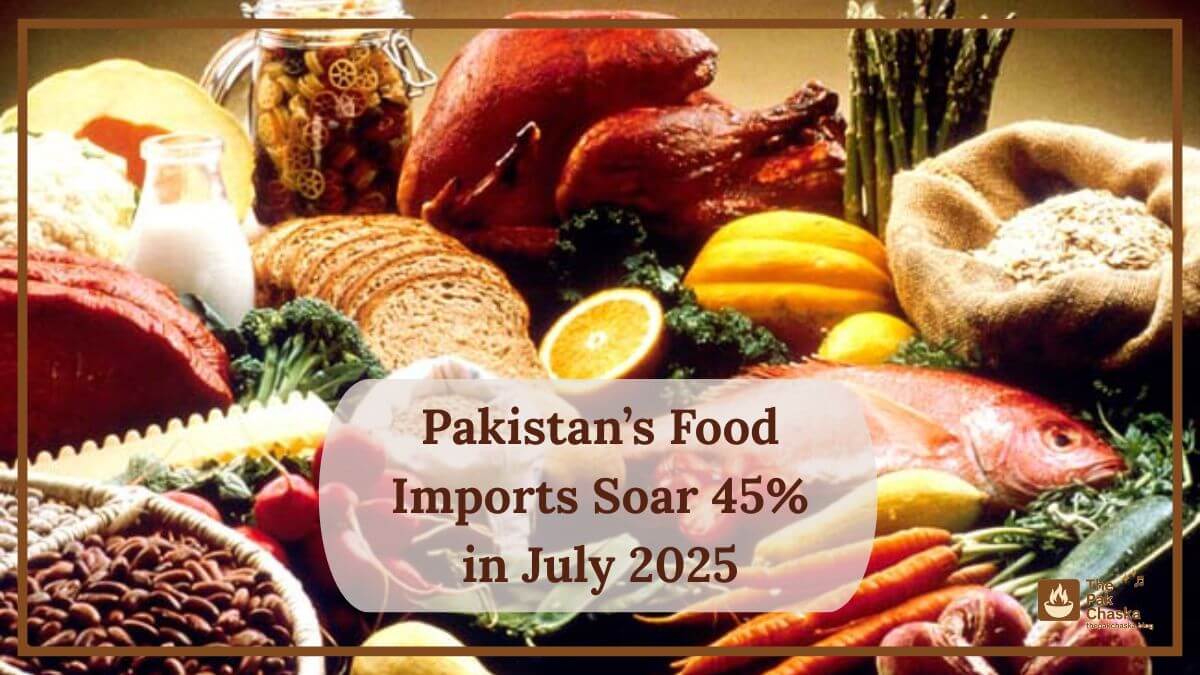
Pakistan experienced a sharp surge in food imports during July 2025, with official data showing an increase of nearly 45% compared to the same period last year. The rise, which is mostly due to more veggies, fish, and meat being brought into the country, has made people worry about the country’s food security in the long term, as well as its ability to produce enough food.
Surge in Food Imports:
Trade reports say that the country spent a lot more on buying basic foods in July than it did in June. This was one of the biggest year-over-year increases seen in recent months. Fresh fruit imports went up because of seasonal shortages, while fish and meat exports went up because demand in the country was higher than supply.
Analysts suggest that a combination of factors—including erratic weather patterns, weak local production, and rising consumer demand—pushed the government and businesses to turn to foreign markets.
Impact on Domestic Production:
The increase in imports has shown once more how much Pakistan relies on food from other countries. Agriculture experts say that the fact that we are importing more fruits and proteins shows that the American farming system isn’t working as well as it could.
Fruit farmers in Punjab and Sindh faced lower-than-expected yields this summer due to heavy rains and flooding, while the fisheries sector continues to struggle with outdated infrastructure and falling marine resources. In the same way, meat output hasn’t kept up with rising demand in cities, so traders have had to rely on meat from other countries.
One agricultural economist said, “This level of reliance on food imports is scary.” “Not only does it hurt local farmers, but it also puts more stress on foreign exchange reserves that are already tight.”
Check Also: Punjab Govt Sanctions Rs800m for Ichhra Bazaar Upgrade
Inflation and Price Concerns:
Inflation is one of the most important problems that comes up when prices go up. Due to freight costs, currency swings, and changes in prices around the world, imported foods often cost more. In the end, these costs are passed on to customers.
In July, the prices of some foreign fruits went up very quickly in stores. The prices of meat also went up. Food prices are already a big problem for most families, and experts worry that the rise in imports will make things worse in the coming months.
“Consumers are paying more not just because of inflation at home but also due to the added cost of bringing food from abroad,” a Karachi-based trader noted.
Economic and Policy Implications:
The rise in food supplies has effects on the economy as a whole. Pakistan’s current account balance is still very fragile, and import costs going up sharply can make things even worse. This makes us think about the government’s strategies on farming, food security, and trade management.
Policy experts say that the government shouldn’t depend on imports but should instead work to improve farming in the United States. Putting money into modern irrigation, better storage facilities, and better ways to care for animals could help close the gap between supply and demand.
Additionally, supporting the production of high-demand goods like fruits, fish, and poultry in-country could boost rural economies and reduce the need for foreign reserves.
Global Context:
Pakistan isn’t the only country having trouble importing food. Because of climate change, problems in the global supply chain, and growing populations, many emerging countries are facing the same problems. The size of the July rise, on the other hand, shows how quickly Pakistan needs to fix its problems.
Experts say that if the country doesn’t take action, its reliance on imports will only grow, leaving it open to price shocks and supply gaps around the world.
Conclusion:
Food imports went up by almost 45% in July 2025. This is not just a trade number; it is a danger sign for Pakistan’s economy and food security. Imports can help in the short term, but to solve the problem in the long term, we need to improve our own farming and depend less on foreign markets.
Inflation is already putting pressure on households and foreign savings, so what the government does in the next few months will be very important. The government could deal with this problem and build a safer food future by using more sustainable farming methods, investing in agri-technology, and making policy planning better.