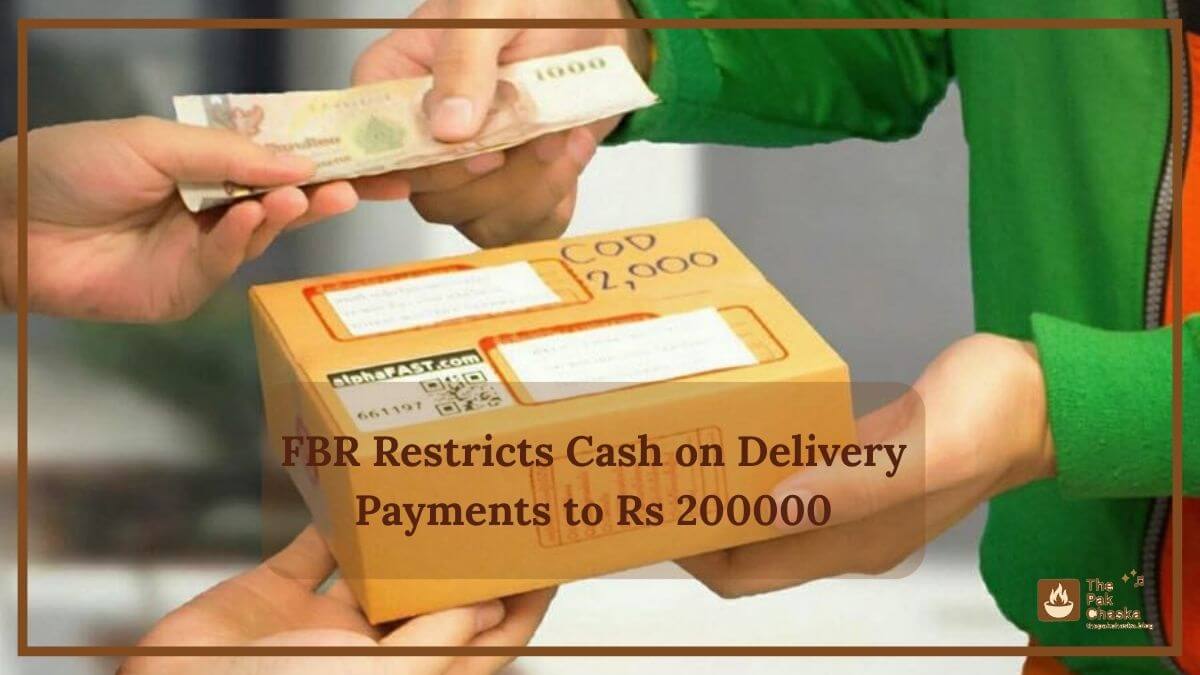
Pakistan’s stores and online shopping have undergone a big change thanks to the Federal Board of Revenue (FBR). From August 12, 2025, Rs 200,000 will be the maximum cash that can be used to pay for Cash on Delivery (CoD) sales. The decision was made public in Income Tax Circular No. 02 of 2025–26. It applies the same rules to online shopping as they do to shopping in stores.
This new cap is part of FBR’s larger plan to encourage digital transactions, cut down on cash flow that isn’t tracked, and make the country’s tax system more clear.
Why the Rs 200,000 CoD Limit Matters:
Pakistan’s e-commerce is growing quickly, and millions of people choose COD as their preferred payment way. This ease of use made online shopping popular, but it also made things harder. It was harder to keep track of business activities when large amounts of cash were involved, and tax dodging was often possible.
So that COD payments can’t be more than Rs 200,000, the government wants to:
- Stop cash deals that aren’t recorded.
- Get people to use digital banking options
- Make it easier to track funds.
- Encourage the move away from cash in the economy.
Customers and companies will have to change how they do things, especially when it comes to orders worth a lot of money.
Impact on E-Commerce Businesses:
This rule could present both problems and chances for online stores.
Challenges:
- People who are used to paying big amounts of cash might be hesitant to switch to digital means.
- Companies will have to improve the ways they accept payments so they can offer easy digital choices.
- There may be short-term problems with sales of some high-value things, like electronics or luxury items.
Opportunities:
- If more people use digital payments, it will be safer and cheaper to deal with large amounts of cash.
- There will be a better record of retailers’ finances, which will make compliance and audits easier.
- This change could help build trust among e-commerce partners around the world who like clear digital deals.
In short, the change may seem inconvenient at first, but it makes way for a more modern and controlled online market.
Check Also: Pakistan Joins Worlds Top 40 Economies with $411B GDP
What It Means for Consumers:
Most people won’t have to make any changes to their small orders, which usually cost less than Rs 200,000, because of the new cap. People who want to buy more expensive things will have to use bank transfers, credit cards, or other digital payment methods instead of COD.
At first, this change may seem strange, but it has clear benefits:
- More safety: You don’t have to carry or hand over big amounts of cash.
- Transparency: Digital receipts show that you paid for something and hold you accountable.
- Convenience: You can pay right away from anywhere with online banking and mobile apps.
Moving in this direction could help Pakistani customers become better at using digital money in the long run.
Driving Pakistan Toward a Cashless Economy:
The Rs. 200,000 COD cap isn’t a one-time thing. As part of its plan to modernize its economy, Pakistan wants to encourage digital purchases and lessen its reliance on cash.
Similar steps have already been taken by countries around the world, and now Pakistan is following suit. The FBR wants to improve tax collection, increase financial oversight, and bring more businesses into the formal economy by cutting down on transactions that aren’t recorded.
If the new rule is followed correctly, it could make it easier for more people to get access to banking services, make trade more open, and help the digital economy.
Conclusion:
The FBR’s move to limit Cash on Delivery payments to Rs 200,000 is a big change for both stores and online shopping. Buyers who need cash are likely to be resistant at first, but the long-term effect is likely to be good. Businesses will gain from payments that are safe and can be tracked, and customers will get used to faster, safer digital options over time.
Pakistan is taking another step toward becoming a cashless economy, and this rule makes it even more important for both buyers and sellers to use modern payment methods.


